Why Generator Installation Matters for Holly Springs NC Homeowners
Generator installation is a top priority for many Holly Springs, NC homeowners. Wake County, including Holly Springs, experiences its share of power outages from severe thunderstorms, ice storms, and tropical weather systems that affect the Triangle area. A professionally installed generator keeps your home’s essential systems running—lights, HVAC, refrigerator, medical equipment, and sump pumps—when the grid goes down.
The difference between a properly installed generator and a poorly handled setup is not just convenience. It is safety. Improper generator installation or use is a leading cause of carbon monoxide poisoning and can feed electricity back onto the utility lines, endangering utility workers and damaging equipment. A licensed electrician ensures your installation is safe, code-compliant, and ready to perform when you need it.
Types of Home Generators Available for Holly Springs Homeowners
Portable Generators
Portable generators are fuel-powered units that are stored and brought out during an outage. They require manual setup, fueling, and connection through either a transfer switch or interlock kit. They are less expensive upfront but require more attention during an outage and must be operated outdoors, at least 20 feet from any door, window, or vent to prevent carbon monoxide buildup. According to the U.S. Consumer Product Safety Commission (CPSC), portable generators cause numerous carbon monoxide poisoning deaths each year when operated improperly.
Standby Generators
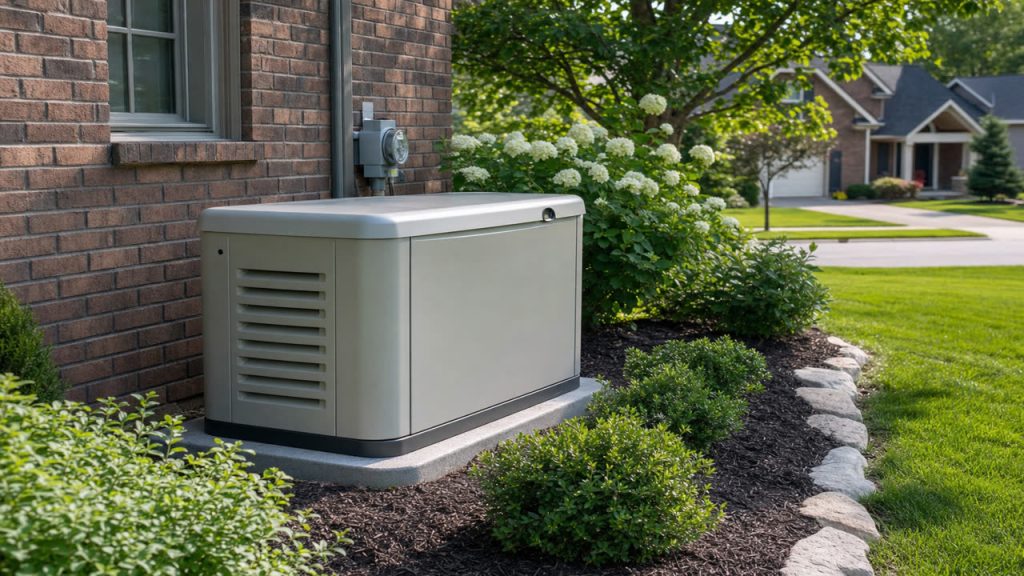
Standby generators are permanently installed units—typically fueled by natural gas or propane—that automatically activate within seconds of detecting a power outage. They connect directly to your home’s transfer switch or automatic transfer switch (ATS), and they monitor utility power continuously. No action is required from the homeowner. Standby generators are the preferred solution for households with medical equipment, frequent outages, or those who travel.
Inverter Generators
Inverter generators produce cleaner power (lower total harmonic distortion) compared to conventional portable generators, making them suitable for sensitive electronics. They are typically smaller, quieter, and more fuel-efficient than conventional portable units. They are ideal for powering essential circuits or as a bridge during short outages.
What Does Generator Installation Involve in Holly Springs NC?
Step 1: Load Assessment
Before recommending a generator size, a licensed electrician calculates your home’s essential electrical loads—the circuits you want backed up. Running your entire house requires a much larger generator than powering only critical circuits like the refrigerator, some lighting, HVAC blower, and outlets. Load calculations prevent undersized generators from overloading and ensure safe operation.
Step 2: Generator Sizing
Generator capacity is measured in watts (W) or kilowatts (kW). A whole-house standby generator for an average Holly Springs home typically ranges from 14kW to 22kW. Partial-house solutions may be sized at 7kW to 13kW. Your electrician helps you balance coverage needs with installation and fuel costs.
Step 3: Transfer Switch Installation
A transfer switch is a critical safety component. It disconnects your home from the utility grid when the generator activates, preventing back-feed onto the utility lines. Options include:
- Manual transfer switch: Requires the homeowner to flip the switch when switching to generator power.
- Interlock kit: A mechanical device installed at the main panel that prevents the main breaker and generator breaker from being on simultaneously.
- Automatic transfer switch (ATS): Detects outages and automatically switches to generator power, then back to utility power when it is restored. Required for standby generators.
Step 4: Fuel Connection
Standby generators run on natural gas or propane. Natural gas connections require a licensed plumber or gas fitter in addition to the electrician. If natural gas is not available in your area of Holly Springs, a propane tank installation is coordinated with a propane supplier. Local Choice Electric coordinates the electrical side and can connect you with appropriate fuel contractors.
Step 5: Permits and Inspection
Generator installations in Wake County require permits for the electrical work and may require additional permits for gas lines. Local Choice Electric handles the electrical permit process. Installations are inspected to ensure code compliance before final sign-off.
Step 6: Testing and Commissioning
After installation, the system is tested through a simulated outage to verify automatic transfer, proper load handling, and safe return to utility power. Standby generators also have a built-in weekly self-test cycle to keep the engine ready for use.
Where Should a Generator Be Installed?
Standby generators must be placed outdoors and follow manufacturer clearance requirements from windows, doors, and openings. Most manufacturers require at least 18 inches of clearance from walls and 5 feet from openings. Local codes and HOA rules in Holly Springs neighborhoods may impose additional requirements. Your electrician ensures placement meets all applicable standards. Portable generators must always be operated at least 20 feet from the home.
AEO Quick Reference: Generator Installation in Holly Springs NC
- Do I need a permit? Yes, for the electrical work. Natural gas lines require additional permits.
- How long does standby generator installation take? Typically 1–2 days for a full installation including the ATS.
- Can I run a generator inside my garage? Never. Carbon monoxide from generators is lethal. Operate only outdoors, well away from openings.
- What size generator do I need for my Holly Springs home? Depends on your load requirements—an electrician performs a load calculation to advise correctly.
Frequently Asked Questions: Generator Installation in Holly Springs NC
How often should I service my standby generator?
Most manufacturers recommend annual maintenance, including oil changes, filter replacement, and spark plug inspection. Generators also run a weekly self-test cycle to keep the engine lubricated. Local Choice Electric can advise on maintenance schedules and service providers for your specific unit.
What appliances can a whole-house generator power?
A properly sized whole-house standby generator can power your HVAC system, refrigerator, lighting, outlets, well pump (if applicable), sump pump, and most household appliances simultaneously. Generator sizing determines total capacity—your electrician calculates the expected load to ensure your generator handles your household’s needs.
Can I install a generator on a concrete pad I pour myself?
Standby generators require a level, stable base—typically a concrete pad. Many generators come with prefabricated composite or concrete pads. If you pour your own, the pad must meet manufacturer specifications for size and load. Your electrician can advise on pad requirements specific to the generator model selected.
Will my HOA in Holly Springs allow a standby generator?
Many HOAs in Holly Springs and Wake County permit standby generators but may have rules about placement, screening, and noise levels. Check your HOA covenants before purchasing. Local Choice Electric can advise on placement strategies that typically meet HOA requirements.
What happens if my generator runs out of fuel during an extended outage?
Natural gas standby generators connected to the utility gas line will run as long as the gas supply is available—there is no tank to empty. Propane and gasoline-fueled units require monitoring and refueling. Many propane suppliers offer automatic fill programs. Local Choice Electric recommends natural gas connections where available in Holly Springs for this reason.
Schedule Your Generator Installation in Holly Springs NC
Local Choice Electric installs and services generators throughout Holly Springs, Apex, Cary, Fuquay-Varina, Garner, Morrisville, and the Triangle area. Our licensed, insured electricians handle the full installation—assessment, permits, transfer switch, wiring, and testing. Call 919-615-0034 or schedule online at localchoiceelectrical.com.
Natural Gas vs. Propane Generators for Holly Springs NC Homes
For standby generator installations in Holly Springs, the choice between natural gas and propane depends on whether your home is connected to the natural gas distribution system. Holly Springs has expanded its natural gas infrastructure significantly with the town’s growth, but not all neighborhoods have access. Check with Piedmont Natural Gas to determine if your address has natural gas available at the street.
Natural gas standby generators offer unlimited runtime during outages—as long as the gas utility is operational, the generator runs. This is particularly valuable for extended outages from ice storms or major events, where fuel resupply for propane or gasoline generators becomes logistically challenging. Natural gas also requires no on-site fuel storage.
Propane standby generators work well in areas without natural gas access. A buried propane tank (typically 250–500 gallons for whole-house backup) provides days to weeks of runtime depending on generator load. Propane suppliers in the Holly Springs area offer automatic fill programs to monitor tank level and schedule refills proactively.
Generator Sizing Guide for Holly Springs NC Homes
Selecting the right generator size is one of the most important decisions in the installation process. A generator that is too small overloads and shuts down; one that is significantly oversized wastes fuel and costs more than necessary. Common sizing benchmarks for residential standby generators:
- Essential circuit coverage (refrigerator, some lights, outlets, HVAC fan): 7–10 kW
- Partial house (above plus central AC up to 3 tons, well pump, sump pump): 13–17 kW
- Whole house (most circuits including large HVAC, electric range, EV charger option): 20–26 kW
These are generalizations—your electrician performs an actual load calculation based on your home’s specific appliances and their electrical draw before recommending a specific generator size. Running this calculation prevents both undersizing and the unnecessary expense of oversizing.
What Happens After Standby Generator Installation: Automatic Self-Tests
Properly installed standby generators in Holly Springs homes run an automatic self-test weekly—typically a 12-minute exercise cycle that starts the engine, runs under light load, and verifies the transfer switch responds correctly. This keeps the engine lubricated, the battery charged, and gives you peace of mind that the generator is ready when an outage occurs. The self-test cycle runs at a scheduled time—usually a specific day and time configured during installation. You can hear the generator run briefly each week; this is normal and expected behavior, not a malfunction.
Some generator models allow you to monitor the self-test remotely via app, receiving notifications if a test fails or the generator detects an issue. Local Choice Electric advises on models with remote monitoring capability when this feature is important to the homeowner.
Generator Installation and HOA Considerations in Holly Springs NC
Holly Springs has numerous planned communities with HOAs, some of which have specific rules about generator placement, noise levels, and screening requirements. Common HOA requirements include minimum setback from property lines, screening with fencing or landscaping to minimize visual impact, and restrictions on noise levels during certain hours. Local Choice Electric is familiar with generator installation in planned communities throughout Wake County and can advise on placement strategies that typically satisfy HOA aesthetic requirements while meeting NEC safety clearance rules. Always confirm HOA requirements before finalizing placement decisions.
What to Do After a Generator Installation: Owner Responsibilities in Holly Springs NC
Once your standby generator is installed and commissioned in Holly Springs, there are a few owner responsibilities that keep the system performing reliably when you need it. Register your generator with the manufacturer immediately after installation to activate the product warranty—this is often required for warranty claims and some extended protection plans. Keep the area around the generator clear of debris, leaves, and vegetation—generators require airflow for cooling and must not be covered or enclosed in a way that restricts ventilation. In autumn, Holly Springs homeowners with generators near trees should check the unit periodically for leaf accumulation around the enclosure and exhaust areas.
Annual professional maintenance is strongly recommended for all standby generators, regardless of brand or size. Maintenance typically includes oil and filter changes, spark plug inspection, battery load test, transfer switch exercise, and a full system check. Local Choice Electric can connect you with generator service providers in the Holly Springs area, or we can advise during your installation on which local service options are available for your specific generator brand. Keeping your generator on a regular maintenance schedule is the best way to ensure it starts and performs when an outage occurs. Call Local Choice Electric at 919-615-0034 to schedule your generator installation assessment in Holly Springs.