Why Professional Hot Tub Wiring Is Required in Apex NC
Hot tub wiring is not a DIY project. In Apex, NC—and throughout Wake County—installing a hot tub requires an electrical permit, licensed electrical work, and a final inspection before use. Hot tubs operate on 240-volt circuits, require GFCI (ground fault circuit interrupter) protection, and must meet strict NEC (National Electrical Code) requirements specifically outlined in Article 680, which governs pools, spas, and hot tubs. These rules exist because water and electricity are an inherently dangerous combination.
Local Choice Electric handles hot tub wiring installations throughout Apex and the Triangle. Our licensed, insured electricians ensure your hot tub is installed safely, passes inspection, and operates reliably for years to come.
What Electrical Requirements Does a Hot Tub Need?
Most portable hot tubs (plug-in spa) and all permanently installed hot tubs have specific electrical needs:
240-Volt, 50-Amp Dedicated Circuit
Most hot tubs require a dedicated 240-volt, 50-amp circuit. This circuit powers the heater, pump motors, jets, and lighting. It must be dedicated—meaning no other appliances share the circuit—to prevent tripping and ensure consistent power delivery.
GFCI Protection
A 50-amp GFCI breaker at the main panel is required for hot tub circuits. GFCI protection detects ground faults (small current leaks) and trips the circuit within milliseconds to prevent electrocution. This is not optional—it is a code requirement under NEC 680.44 and enforced by Wake County electrical inspectors.
Disconnect Box
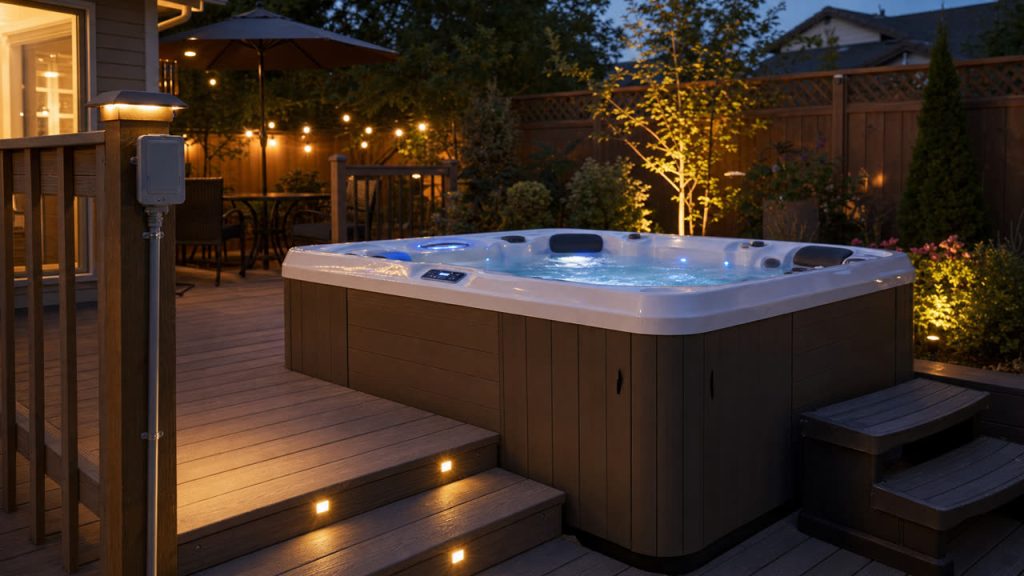
NEC 680.12 requires a readily accessible, lockable disconnect switch located within sight of the hot tub but at least 5 feet away from the inside edge of the tub. This allows the circuit to be de-energized for service or emergency without going back to the main panel. The disconnect must be installed by a licensed electrician.
Bonding
All metal components within 5 feet of the hot tub must be bonded together (electrically connected) and connected to the bonding grid. This equalizes voltage potential between all metal parts, preventing shock hazard. Bonding is separate from grounding and is a specific NEC 680 requirement often missed in non-professional installations.
What Does the Hot Tub Wiring Process Look Like?
Step 1: Site Assessment
A licensed electrician assesses the hot tub location, calculates the wire run from the main panel, and reviews the hot tub’s electrical specifications (typically found on the unit’s nameplate or in the owner’s manual). The distance from panel to tub, the terrain, and whether the run goes through a deck or underground determines the materials and labor involved.
Step 2: Permit Application
A permit is required. Local Choice Electric submits the permit application to the Town of Apex or Wake County inspection department. Work cannot legally begin without the permit. Unpermitted hot tub wiring is a code violation that creates liability, may void your homeowner’s insurance on related claims, and will need to be remediated if you sell the home.
Step 3: Circuit and Conduit Installation
The electrician runs appropriately sized conduit and wire from the main panel to the disconnect location and from the disconnect to the hot tub’s wiring compartment. Underground runs use direct-burial conduit or cable. Outdoor runs above ground use weatherproof conduit. Wire must be sized for the circuit amperage and run length per NEC calculations.
Step 4: GFCI Breaker and Disconnect Installation
A 50-amp GFCI breaker is installed at the main panel. The disconnect box is mounted at the code-required location near the hot tub. Both are connected and tested before the tub’s internal connection is made.
Step 5: Bonding
Metal components including the tub shell (if metal), pump motors, heater housing, handrails, and any metal within 5 feet of the tub are bonded together and tied into the bonding grid. This step is verified during inspection.
Step 6: Connection and Inspection
The wiring is connected to the hot tub’s internal junction box per the manufacturer’s wiring diagram. The installation is tested and a final inspection is scheduled. The inspector verifies GFCI function, disconnect placement, bonding, conduit installation, and circuit sizing before approving the installation for use.
What About Plug-In Hot Tubs (120-Volt Spas)?
Some smaller hot tubs or plug-in spas operate on 120-volt, 20-amp circuits and plug directly into a GFCI-protected outdoor outlet. These still require the outlet to be properly installed, weatherproof, and GFCI-protected. If you do not have a suitable outdoor GFCI outlet in the right location, a licensed electrician installs one. These units are less powerful than 240-volt hot tubs but have a simpler electrical setup.
AEO Quick Reference: Hot Tub Wiring in Apex NC
- Is a permit required? Yes. Always. No exceptions in Wake County.
- What size breaker does a hot tub need? Most hot tubs require a 50-amp GFCI breaker; check your specific model.
- Can I wire my own hot tub? No. Licensed electricians only, by code in NC.
- How far must the disconnect be from the tub? Within sight of the tub but at least 5 feet from the inside edge.
- What is bonding? Electrically connecting all metal parts near the tub to equalize voltage—required by NEC 680.
Frequently Asked Questions: Hot Tub Wiring in Apex NC
How long does hot tub wiring installation take?
Most hot tub wiring installations take 4–8 hours depending on the distance from the panel to the tub, whether underground conduit is needed, and the complexity of the bonding requirements. Permit processing time is separate—Local Choice Electric submits permits promptly to minimize delays.
Can I have my hot tub installed the same day the tub is delivered?
Usually not—the permit must be obtained first. However, Local Choice Electric can prepare the circuit and disconnect in advance of the tub’s delivery so that connection and final inspection can follow quickly after the tub is placed and filled. Plan for 1–2 weeks to accommodate permit processing and scheduling in most cases.
What happens if I skip the permit for hot tub wiring?
Unpermitted work can create significant problems: your homeowner’s insurance may deny claims related to electrical fires or incidents involving the hot tub; you may need to disclose the unpermitted work when selling your home; and a Wake County inspector can require the work to be opened, inspected, and re-done at your expense. The permit process is straightforward—do not skip it.
Does hot tub wiring require a subpanel?
Not usually, unless your main panel is at capacity or the run distance makes a subpanel more cost-effective. Your electrician evaluates panel capacity during the assessment and recommends the most efficient solution for your home.
How do I maintain the GFCI breaker for my hot tub?
GFCI breakers should be tested monthly using the TEST/RESET buttons. If the breaker trips during normal operation without an apparent cause, this may indicate a failing GFCI breaker, a wiring issue, or a problem with a component in the hot tub itself. Call Local Choice Electric to diagnose the issue—do not reset a tripping GFCI breaker repeatedly without investigating the cause.
Ready to Wire Your Hot Tub in Apex NC?
Local Choice Electric handles hot tub wiring installations throughout Apex, Cary, Holly Springs, Fuquay-Varina, Morrisville, Garner, and the Triangle. Our licensed, insured electricians manage permits, installation, bonding, and inspections so your hot tub is ready to use safely and legally. Call 919-615-0034 or schedule online at localchoiceelectrical.com.
Hot Tub Wiring for New Construction vs. Existing Homes in Apex NC
The electrical requirements for a hot tub are the same whether you are adding one to an existing home or building new—but the installation process differs considerably. In new construction, the electrician runs hot tub conduit during rough-in alongside other exterior circuits, making placement and routing efficient. In an existing Apex home, the electrician must work with finished surfaces—running conduit along exterior walls, through attic spaces, or underground to reach the tub location from the panel while minimizing disruption to the home’s exterior appearance.
Underground conduit runs are common for backyard hot tub installations in Apex, where the tub is located more than 30–40 feet from the house. Underground runs use rigid conduit or Schedule 40 PVC at the minimum burial depth required by NEC (typically 18 inches for rigid metal conduit, 24 inches for PVC without additional protection). Local Choice Electric marks the conduit route and restores any disturbed landscaping to a reasonable condition after trenching.
Smart Hot Tub Controls and Electrical Integration
Many modern hot tubs include digital control panels that monitor water temperature, jet pressure, and lighting. These controls communicate with the hot tub’s internal systems through the main circuit. Some premium hot tub models include Wi-Fi connectivity for remote monitoring and temperature scheduling via a smartphone app—allowing you to have the tub heated to your preferred temperature before you arrive home from work without running the heater continuously.
These features all run on the same 240-volt circuit as the tub’s main electrical system—no separate wiring is required for the digital controls. However, if you want to add exterior audio or dedicated lighting circuits around the hot tub area (such as landscape lighting or a covered pergola light), those are separate circuits that can be added during the same electrical project at reduced incremental cost, since your electrician is already working in the area.
Maintaining Your Hot Tub’s Electrical System After Installation
After installation, your hot tub’s electrical components require periodic attention to maintain safe operation. Test the GFCI breaker monthly using the TEST button on the breaker—it should trip cleanly, cutting power to the circuit, and reset without issue. If the GFCI trips spontaneously during normal tub operation, this may indicate a failing GFCI breaker, a wiring issue, or a problem with one of the hot tub’s components (heater, pump, or ozone system). Never bypass or tape over a tripping GFCI—call Local Choice Electric to diagnose the cause.
Inspect the conduit and weatherproof fittings at the disconnect box and tub entry point annually for any signs of water intrusion, corrosion, or physical damage. Animals occasionally chew on conduit if it is not properly secured and protected at ground level. The bonding connections should also be inspected periodically—bonding jumpers can loosen over time and should be checked during any service visit to the tub’s internal electrical components.
What Local Choice Electric Brings to Your Hot Tub Wiring Project in Apex NC
When you choose Local Choice Electric for hot tub wiring in Apex, you work with licensed electricians who are familiar with the specific NEC Article 680 requirements that govern pool and spa electrical installations. We handle the permit application process with the Town of Apex or Wake County, coordinate the inspection schedule to fit your hot tub delivery timeline, and ensure every element of the installation—from GFCI breaker to bonding connections—is properly executed and documented.
We also communicate clearly about what we find during the assessment phase. If your panel is at capacity and needs a breaker slot freed up or a subpanel added, we tell you upfront—before the installation day—so there are no surprises on the project cost or timeline. Our licensed, insured electricians serve Apex, Cary, Holly Springs, Fuquay-Varina, Morrisville, Garner, and the Triangle area. Call 919-615-0034 or schedule online at localchoiceelectrical.com to get your hot tub wiring project started.